Why Direct Labels Make Presentation Charts Easier to Read Than Legends
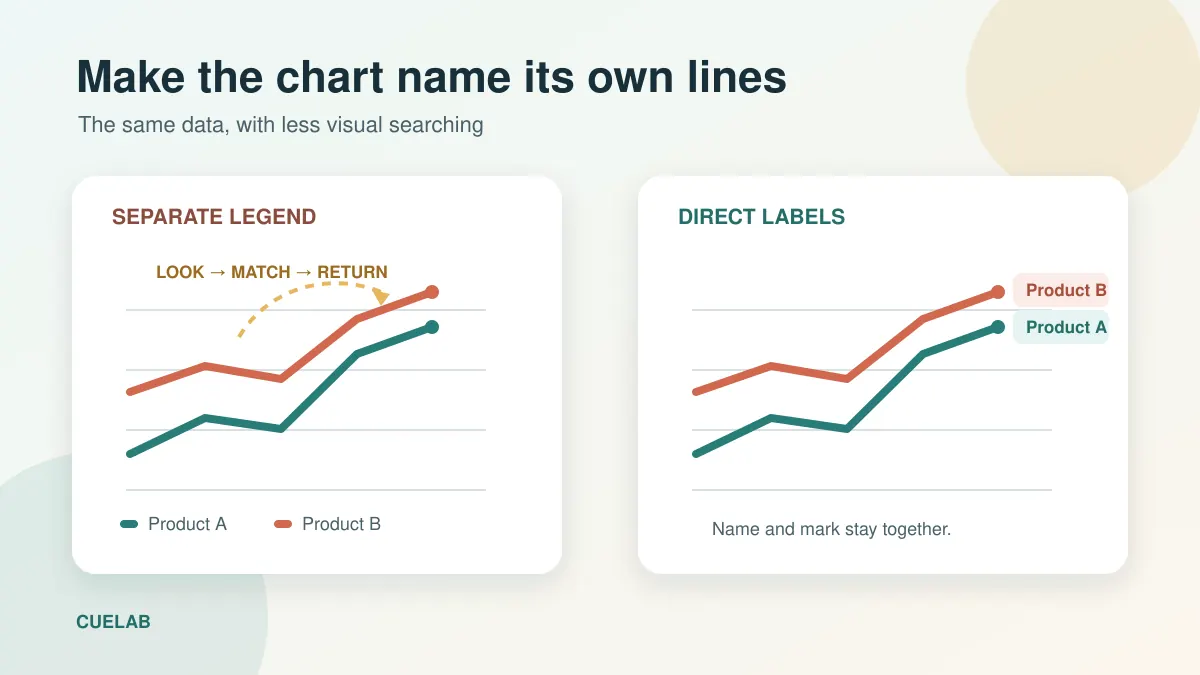
A practical guide to replacing detached chart legends with direct labels that reduce visual searching, strengthen accessibility, and keep evidence beside its meaning.
Practical guides to presenting, speaking, and communicating clearly
A practical guide to replacing detached chart legends with direct labels that reduce visual searching, strengthen accessibility, and keep evidence beside its meaning.

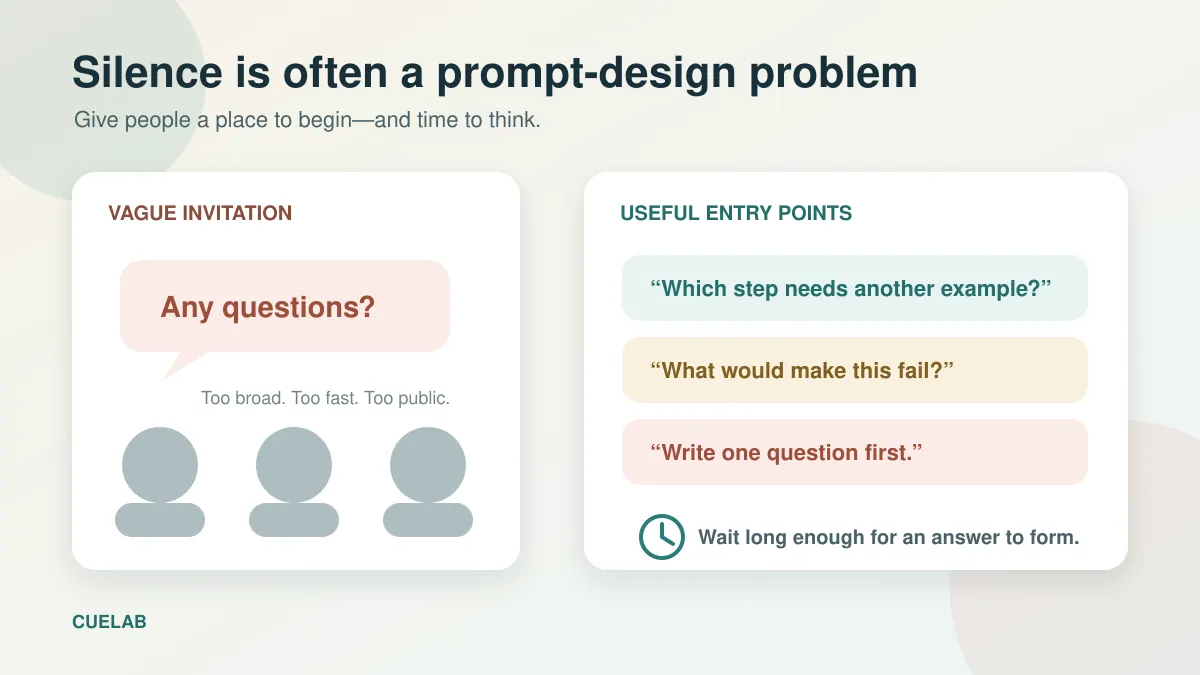
Why a polite invitation can produce a silent room—and how focused prompts, wait time, and lower-pressure response routes lead to better questions.
“Good job” is easy to say and pleasant to hear. It can mark a warm moment between a teacher and student, a manager and employee, or a coach and speaker. The trouble begins when those two words are expected to do the work of feedback. They usually cannot. The listener may know that you approve, … Read more
The question arrives just as the room begins to relax. It is precise, relevant, and one step beyond the evidence you prepared. Everyone looks at you. In that moment, many speakers feel they have only two choices: produce an answer immediately or admit defeat. There is a better option. A capable presenter can be useful … Read more
A chart can contain the right numbers, use a familiar format, and still leave an audience with the wrong impression. The problem is not always a fabricated value or an obvious design trick. Sometimes the scale makes a modest difference look dramatic. Sometimes two lines appear to move together only because each has its own … Read more
Two people begin speaking at the same moment on a video call. Both stop. Each waits for the other, both restart, and the collision happens again. It feels clumsy enough that someone apologizes, even though neither person was trying to interrupt. Talking over one another online is often treated as a manners problem. Manners can … Read more
A speaker knows every sentence. The opening is exact, the transitions arrive in order, and the conclusion matches the script. Yet the delivery can feel strangely distant, as though the speaker is reproducing a recording rather than explaining something to the people in the room. Memorization itself is not the problem. Actors, experienced speakers, and … Read more
The opening gets the room’s attention. The speaker presents a recognizable problem, explains why it matters, and promises a useful answer. Ten slides later, the audience is looking at background details without a clear sense of how those details connect to the original question. The middle is often where a presentation loses its direction because … Read more
A colleague replies to a completed task with “Thanks 🙂.” In a familiar team chat, the small addition may make the acknowledgment feel warm. The same smiley after a message about a missed deadline can feel dismissive, and in an unfamiliar professional exchange it may seem out of place. An emoji does not carry one … Read more
A lesson feels clear while the teacher is explaining it. The example makes sense, the steps seem connected, and the student can follow the answer as it develops. The next day, faced with a similar problem alone, the student does not know where to begin. This gap is frustrating, but it is not necessarily evidence … Read more